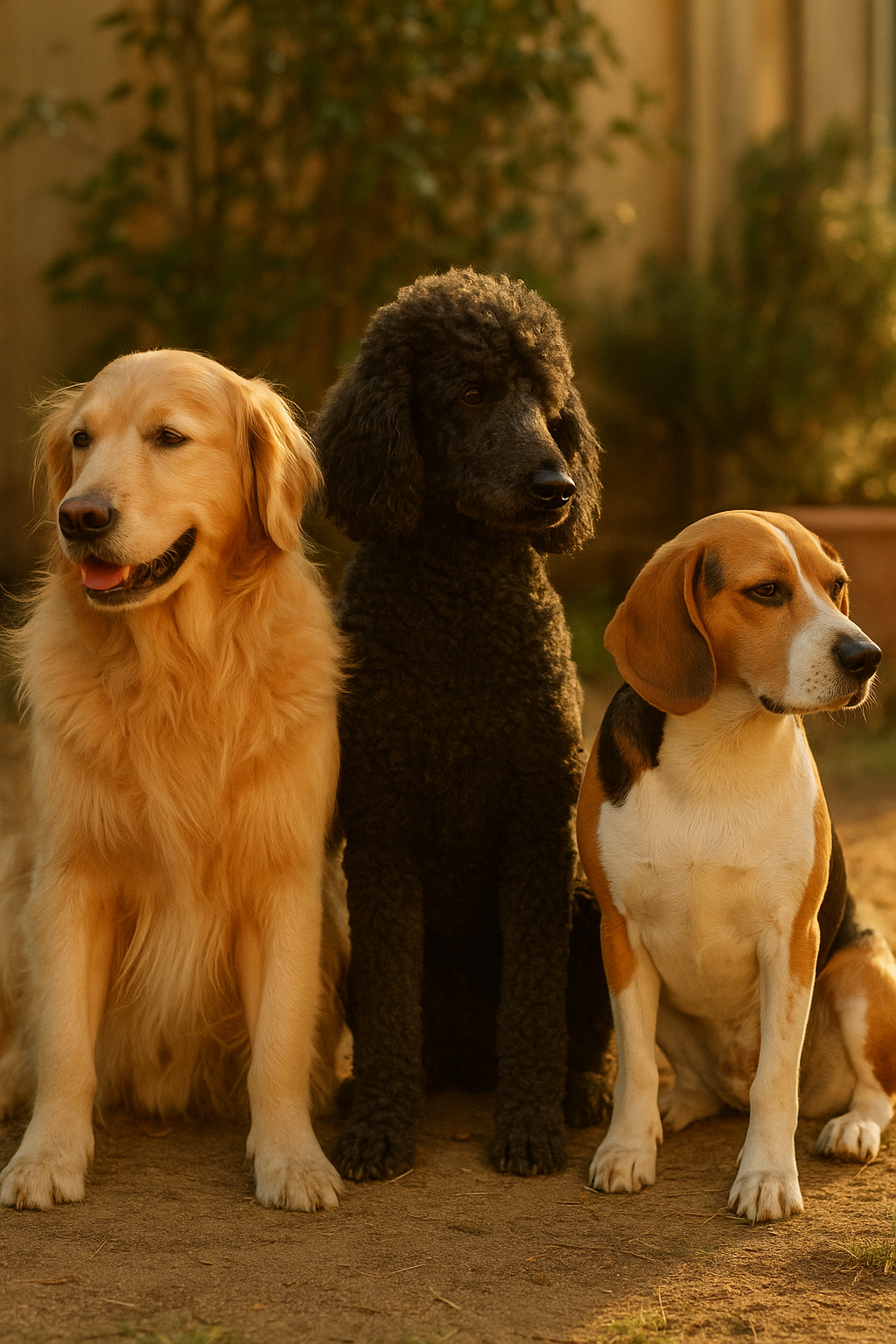
"How often should I bring my dog in?" is probably the question we get asked most. And the honest answer is: it depends on the coat, not the calendar.
The grooming intervals that work for a poodle are completely wrong for a border collie, and the schedule for a short-coated Labrador is different again. What's more, the right frequency isn't just about aesthetics — it's about coat health, skin health, and preventing the kinds of problems (matting, ear issues, overgrown nails) that become harder to deal with the longer they're left.
This guide covers the main coat types and the breeds that fall into each category. It's a starting point — individual dogs vary, and coat condition is always more informative than breed alone.
Continuously growing coats: every 6–8 weeks
Poodles, bichons frises, Malteses, schnauzers, and most doodle crosses fall into this category. Their coats grow continuously rather than shedding naturally, which means without regular trimming the coat gets longer indefinitely. Left long enough, it mats. Left matted long enough, the only option is to clip short and start again.
Six to eight weeks is the interval that keeps the coat manageable between visits and means there's always something to work with rather than starting from scratch. Some owners prefer eight to ten weeks and maintain the coat more actively at home. Some prefer six weeks and do minimal brushing in between. Either is fine as long as the coat arrives at each session without significant matting.
Miniature and toy poodles are sometimes assumed to need less frequent grooming than standard poodles because they're smaller. The coat type is the same — size doesn't change the interval.
Long silky coats: every 8–10 weeks
Golden retrievers, setters, spaniels, and similar breeds have long, silky coats that shed naturally but still need regular trimming — particularly around the ears, paws, and underbelly. The coat doesn't grow as relentlessly as a poodle's, but neglected silky coats mat in the friction zones just as reliably.
Golden retrievers in particular are commonly brought in once or twice a year, which is usually not enough. The feathering on the legs and tail, the coat behind the ears, the undercarriage — these areas mat in three to four months even with regular brushing. Eight to ten weeks keeps them manageable.
Coat condition on the day of the appointment tells us more than the last booking date. A dog brushed daily can go longer between grooms; one that hasn't been brushed in six weeks may arrive needing more work than the schedule suggests.
Double coats: every 8–12 weeks, more during shedding seasons
Border collies, Labrador retrievers, German shepherds, huskies, and similar breeds have a dense undercoat beneath a harder outer coat. They shed significantly — and periodically shed in volume during seasonal coat changes, typically spring and autumn.
Professional grooming for double-coated breeds is primarily about de-shedding: removing the dead undercoat that the dog is struggling to shed on its own. Without it, the dead fur gets trapped in the living coat and becomes the starting point for matting. It also accumulates on furniture and clothing considerably more than it would otherwise.
These breeds don't typically need haircuts, but they benefit enormously from a proper bath, blow-dry, and brush-out two to four times a year — and more frequently during shedding seasons. If your Labrador or collie is leaving an unusual amount of fur around the house, that's the signal that the coat needs attention.
One important note: double coats should not be shaved. The double coat regulates temperature in both directions — it keeps the dog warm in winter and insulates against heat in summer. Shaving it removes this function and can cause coat texture changes that are difficult to reverse.
Wire coats: every 8–10 weeks
Schnauzers, West Highland terriers, border terriers, and similar breeds have a coarse, wiry outer coat. These coats have two maintenance options: stripping (removing the dead outer coat by hand to maintain the correct texture) or clipping (cutting it, which is faster but eventually softens the coat texture and affects colour). Which approach you use depends on whether the dog is shown and on personal preference.
For pet grooming, most wire-coated dogs are clipped rather than hand-stripped, and an eight to ten week interval keeps the coat neat without letting it grow long enough to lose its shape.
Short, smooth coats: 2–3 times a year
Labradors (smooth), beagles, boxers, dalmatians, and similar smooth-coated breeds don't need professional grooming for coat maintenance in the same way. A bath, blow-dry, nail trim, and ear check two or three times a year is usually sufficient — more if the dog swims frequently or lives in a way that keeps them muddy.
The things that benefit these dogs from a grooming visit are less about the coat and more about the checks: nails that grow continuously regardless of coat type, ears that can accumulate debris, and skin that a groomer will notice if something is off. These aren't urgent, but they're worth not skipping entirely.
When to adjust the schedule
The intervals above are defaults, not rules. A few situations where it's worth booking sooner than planned: the coat has been wet repeatedly and dried without brushing, the dog has been ill and less active (reduced movement means less natural coat maintenance), or you've noticed the dog scratching at a specific area — often a sign of early matting or a skin issue under the coat.
If you're not sure where your dog's coat sits, bring them in and we'll tell you what we recommend going forward. Sometimes seeing a coat in person is more useful than a general guide. You can contact us to book or ask a question before booking.