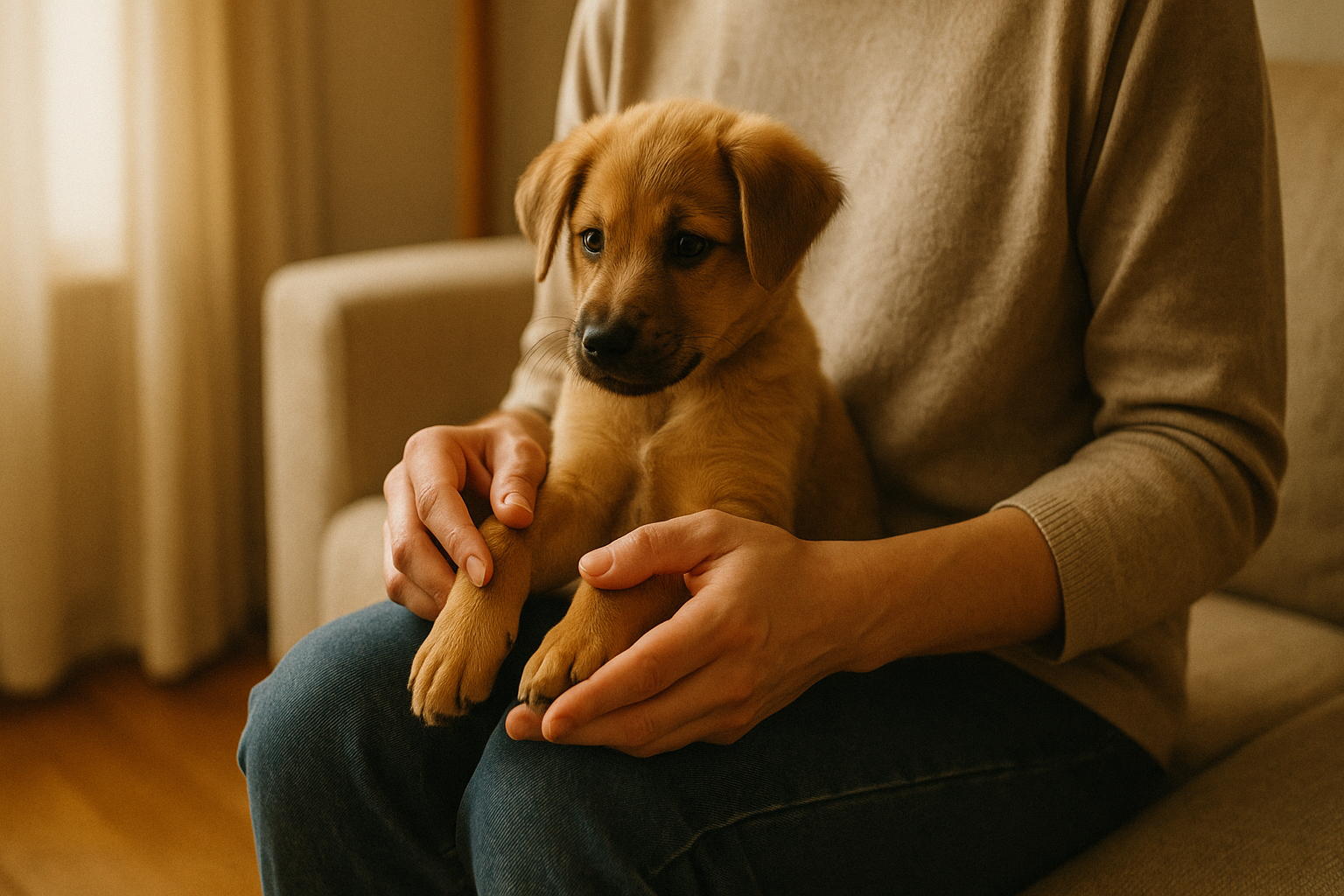
The most anxious dogs we see at the salon didn't become anxious at the salon. They arrived anxious — because nothing in their early weeks prepared them for what grooming actually involves. A table, a dryer, clippers, someone handling their paws and ears. To a puppy who's never experienced any of that, it's a lot at once.
The good news is that a few weeks of calm, low-stakes practice at home can genuinely change how a first grooming session goes. Not overnight, and not guaranteed — but consistently enough that we always recommend it to new puppy owners.
Why the first visit matters more than you might think
Dogs learn from experience, especially early experience. A puppy that has its first grooming session at four months in a loud, rushed environment and comes home stressed has started building an association: grooming = something bad happens. That association doesn't disappear easily. It compounds over visits.
A puppy that arrives to its first session having already been handled all over, heard a hairdryer from a distance, had its paws held and ears touched — that puppy has a different starting point. Not necessarily calm, but much less likely to tip into real distress.
We'd rather spend an extra twenty minutes going slowly at a first session than spend the next three years managing a dog who dreads the grooming table.
Four things to practise at home before the first visit
1. Handling the paws, ears, and mouth daily. Sit with your puppy and gently handle each paw — hold it for a few seconds, touch the toes, press lightly on the pads. Do the same with the ears (outer ear only, don't probe inside) and around the mouth. Keep sessions short — two or three minutes is enough. The goal is that being touched in these places becomes completely unremarkable.
2. Getting them used to the sound of a hairdryer. Start with the dryer on low, across the room, while your puppy is relaxed and doing something else. Move it gradually closer over a few days as long as they stay calm. You don't need to dry them with it — just make the sound familiar. At the salon, the dryer is one of the things that startles puppies most.
3. Practising standing still on a surface. Groomers work with dogs on a table. If a puppy has never stood on a raised, stable surface while being touched, it's one more unfamiliar thing on top of everything else. Put your puppy on a non-slip mat on a low table or countertop, hold them gently, and brush or handle them for a minute or two. Do this several times before the first grooming session.
4. Introducing a brush early and often. Even if your puppy doesn't strictly need brushing yet, making it part of the daily routine means the sensation is familiar by the time they're at the groomer. Use a soft brush to start. Let them sniff it, then use it gently. Associate it with calm, positive moments rather than restraint.
What to tell us when you book
When you contact us to arrange a puppy's first grooming session, tell us what you've been practising and where they seem most sensitive. We adjust our approach based on this — some puppies are completely fine with handling but panic at the dryer; others are the reverse. Knowing in advance means we can spend more time on the specific things your dog finds difficult.
Also let us know how old they are and what breed. Very young puppies (under four months) often do better with a shorter session focused purely on introduction rather than a full groom. We're happy to do that — it's not a wasted visit.
One thing not to do
Don't wait until your puppy's coat genuinely needs attention before booking a first session. By that point the visit is driven by necessity rather than introduction, and there's less room to slow down and let them adjust. The ideal first grooming session is slightly unnecessary — a short, calm visit where nothing urgent needs to happen and there's time to take it at the puppy's pace.
If you're in the Mérignac area and have a puppy approaching their first groom, you're welcome to get in touch before booking. We can talk through what to expect and whether the timing makes sense for where they are in their development.